 by
by 
Second Opinion HVAC Repair in Los Angeles: When “Beyond Repair” Was Actually Repairable
At our HVAC company, we get a lot of calls from homeowners in Los Angeles who have already been told the same thing: “Your system is beyond repair. You need to replace everything.”
Sometimes replacement really is the right choice. But not always.
That’s why second opinions matter.
Recently, we were called out for a second opinion on a split-system air conditioner after another company told the homeowner the system was impossible to repair. The customer had already been told that parts were no longer available and that repairing the unit was essentially off the table.
After a proper inspection, we found something very different: the system was repairable, the parts were available, and the homeowner had more options than they had been given.
That’s exactly why we approach HVAC repair differently.
We Start With Facts, Not Assumptions
When we arrived, the homeowner already knew the compressor had failed. We verified that first.
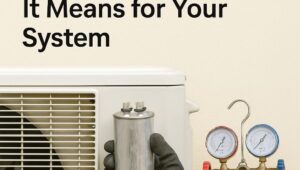
Using electrical testing, we measured the resistance of the compressor’s internal windings and confirmed that the compressor was indeed dead. So in that sense, the previous diagnosis was partly correct: there was a major failure.
But identifying one failed part is not the same thing as giving the homeowner a complete, honest, and technically correct recommendation.
That’s where engineering-based HVAC diagnosis matters.
Instead of jumping straight to “replace the whole system,” we walked the homeowner through all realistic options:
- Replace the failed compressor and keep the existing system
- Install a new air conditioner and furnace
- Upgrade to a new heat pump system
The homeowner told us he preferred to keep the existing system if that was still a safe and practical option. He had been told that was impossible.
It wasn’t.
The Truth About R-410A: This System Was Not “Too Old to Repair”
One of the biggest misconceptions in HVAC right now involves refrigerants.
The homeowner had been told the system could not be repaired because parts were effectively banned or unavailable. That’s not accurate.
Yes, R-22 is no longer produced new, though recycled refrigerant is still available in some cases. But this system was not an R-22 system.
It was running on R-410A, which is much newer and still extremely common throughout Los Angeles. In fact, the vast majority of existing residential systems in this area still use R-410A. While the industry is transitioning to newer refrigerants for newly manufactured equipment, R-410A equipment and repair parts are still widely relevant, and there is absolutely nothing inherently “illegal” or “impossible” about repairing many of these systems when the repair is technically justified.
That was news to the homeowner — and understandably so.
This is why homeowners call us for a second opinion HVAC service in Los Angeles. We explain what is actually changing in the industry, what is still serviceable, and what options truly make sense.
We Don’t Just Replace Parts — We Look for the Root Cause
A failed compressor is expensive. But a more important question is:
Why did it fail?
If you don’t answer that question, you risk installing a new compressor into the same conditions that destroyed the first one.
In this case, we had a very strong clue almost immediately.
The outdoor coil was heavily impacted with dirt and debris. It wasn’t just a little dusty. It was coated in a thick, dense layer of buildup — almost like a gray felt blanket wrapped around the coil.
When a condenser coil gets that dirty, it can’t reject heat properly. And rejecting heat is one of its main jobs.
As airflow across the coil becomes restricted:
- Head pressure rises
- The system runs hotter
- The compressor works harder
- Oil and refrigerant conditions worsen
- Long-term compressor damage becomes much more likely
In plain language: the system was being forced to operate under stress for too long, and the compressor paid the price.
That kind of detail matters. It’s the difference between a guess and a real diagnosis.
Our Repair Process: Done Correctly, Not Halfway
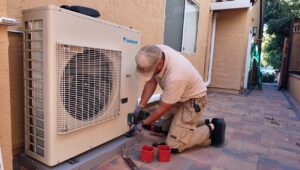
Once the homeowner approved the repair, we sourced the replacement compressor the very next day and performed the job the right way.
Our process included:
1. Mandatory condenser coil cleaning
We made it clear from the start that replacing the compressor without cleaning the coil would be irresponsible. If the coil remains packed with debris, the new compressor could be put right back into damaging conditions.
So we thoroughly washed the coil as part of the repair.
2. Line-set inspection and internal flushing
When we inspected the copper line set, we found dark contamination inside — a sign that the system needed more than just a quick part swap.
We flushed the system multiple times using:
- Nitrogen
- RX11 flush
This helped remove contamination and reduce the risk of carrying harmful residue into the new compressor.
3. Proper brazing and system reassembly
We brazed in the new compressor carefully and completed the repair to professional standards.
4. Nitrogen pressure test
Before charging anything, we pressure-tested the system with nitrogen to verify it held properly and showed no leaks.
5. Deep vacuum
Next, we pulled a deep vacuum to remove air, moisture, and non-condensables from the system — a critical step in any compressor replacement.
6. Final charge and performance verification
After that, we charged the system correctly and verified operation.
The result: the system came back online and performed great.
Most importantly, the customer was relieved. He had been told he was out of options, when in reality he simply needed a more careful and more accurate HVAC company.
Why Los Angeles Homeowners Call Us for a Second Opinion
This job is a perfect example of what makes us different.
We diagnose based on engineering, not sales pressure
We don’t start with a replacement pitch. We start with measurements, inspection, and system behavior.
We explain what is actually possible
Some systems should be replaced. Some should be repaired. Some can go either way depending on budget, age, and goals. We explain the pros and cons honestly.
We give options
In this case, we offered:
- Repair the current system
- Replace with a similar AC and furnace setup
- Upgrade to a heat pump
That’s how it should be. The customer deserves options, not pressure.
We address causes, not just symptoms
A failed compressor is not just a failed compressor. If the coil is plugged and the system is contaminated, that has to be corrected too.
We handle emergency HVAC repairs with urgency
We found the compressor quickly, returned the next day, and completed the repair properly so the homeowner could get cooling restored fast.
Honest HVAC Recommendations Matter
We’re not against system replacement. Sometimes it is the smartest long-term decision. If a repair doesn’t make financial or technical sense, we’ll say so plainly.
But we are against lazy blanket statements like:
- “It’s impossible to repair.”
- “Parts are banned.”
- “You have no choice but to replace it.”
That kind of advice can cost homeowners thousands of dollars unnecessarily.
Our job is to give people real information, real options, and real workmanship.
That’s why so many customers call us when they want an honest HVAC second opinion in Los Angeles.
Need Emergency HVAC Repair or a Second Opinion in Los Angeles?
If you’ve been told your air conditioner or heating system is beyond repair, don’t make a major decision until you’ve had it evaluated properly.
We provide:
- Second opinion HVAC service in Los Angeles
- Emergency AC repair
- Compressor diagnosis and replacement
- Split-system repair
- Honest repair vs. replacement recommendations
- Engineering-based HVAC diagnostics
Sometimes replacement is the best option. Sometimes repair is absolutely possible. Either way, you deserve facts — not guesses.
Call us today if you want a real diagnosis and clear options for your HVAC system in Los Angeles.